The clipboard becomes the system.
Mission
One system, from the work to the decision.
Most operations run on paper, spreadsheets and memory. Someone writes a number down, someone else types it in again, and by the time it reaches a manager the day it described is over. We build the software that records the work as it happens, so the people running the operation can see where they stand while they can still do something about it.
Systems
Four kinds of system. The same idea underneath.
A processing plant, a data team, an insurer pricing risk. The industry changes; what we do does not. Each system records the work where it happens, instead of asking someone to type it up afterwards, and hands it back in a form the team can use straight away.
/0.1
Software for factory floors. It records what comes in, follows each batch through every station, and matches what came out against what went in while the shift is still running.
Manufacturing Systems
/0.2
The plumbing beneath everything else: moving data from where it is created to where it is needed, keeping one agreed version of the names and codes a business runs on, and leaving a trail of who changed what.
Data Infrastructure
/0.3
Output, cost, yield and demand, worked out from the same record that captured the work. The numbers arrive while the period they describe is still open, in front of the people who can do something about them, rather than in a report the following week.
Operational Analytics
/0.4
Pricing, exposure and loss models for insurers, reinsurers and brokers, along with the data they run on. We build the numbers that sit underneath an insurance product, not the product itself. Sometimes the answer here is a model and a method rather than a piece of software.
Risk & Actuarial Models
Traceability
Six steps from the work to a decision.
Something happens — a delivery, a transaction, a claim. It gets recorded, it reaches somebody, and they change what happens next. Every system we build follows those same six steps, whatever the industry, and it is only as good as its weakest one.
01
The work
A delivery arrives. A lorry is on the road. A policy is written. A payment clears. Something real happens, whether or not anyone writes it down.
02
What matters
Not everything that happens is worth recording. An arrival, a transfer, a reading, a loss, a claim. Record too much and nobody reads it. Record too little and nobody can trust it.
03
The record
Each of those moments is written down once, as it happens, and tied to the thing it belongs to: a batch, an order, a vehicle, a policy. Get this wrong and nothing downstream can be traced.
04
The system
The software — or the model — that the work actually runs on, not a second tool somebody types into afterwards. If the system is not part of the work, the record will not match the work.
05
The decision
Output is down. Stock will not last the month. This risk is priced too low. Each of those comes from the same record that captured the work, and arrives early enough for somebody to do something.
06
The action
Somebody acts. They restart a line, change an order, adjust a price, set a new limit. Every step before this one exists only to make this one possible.
Work
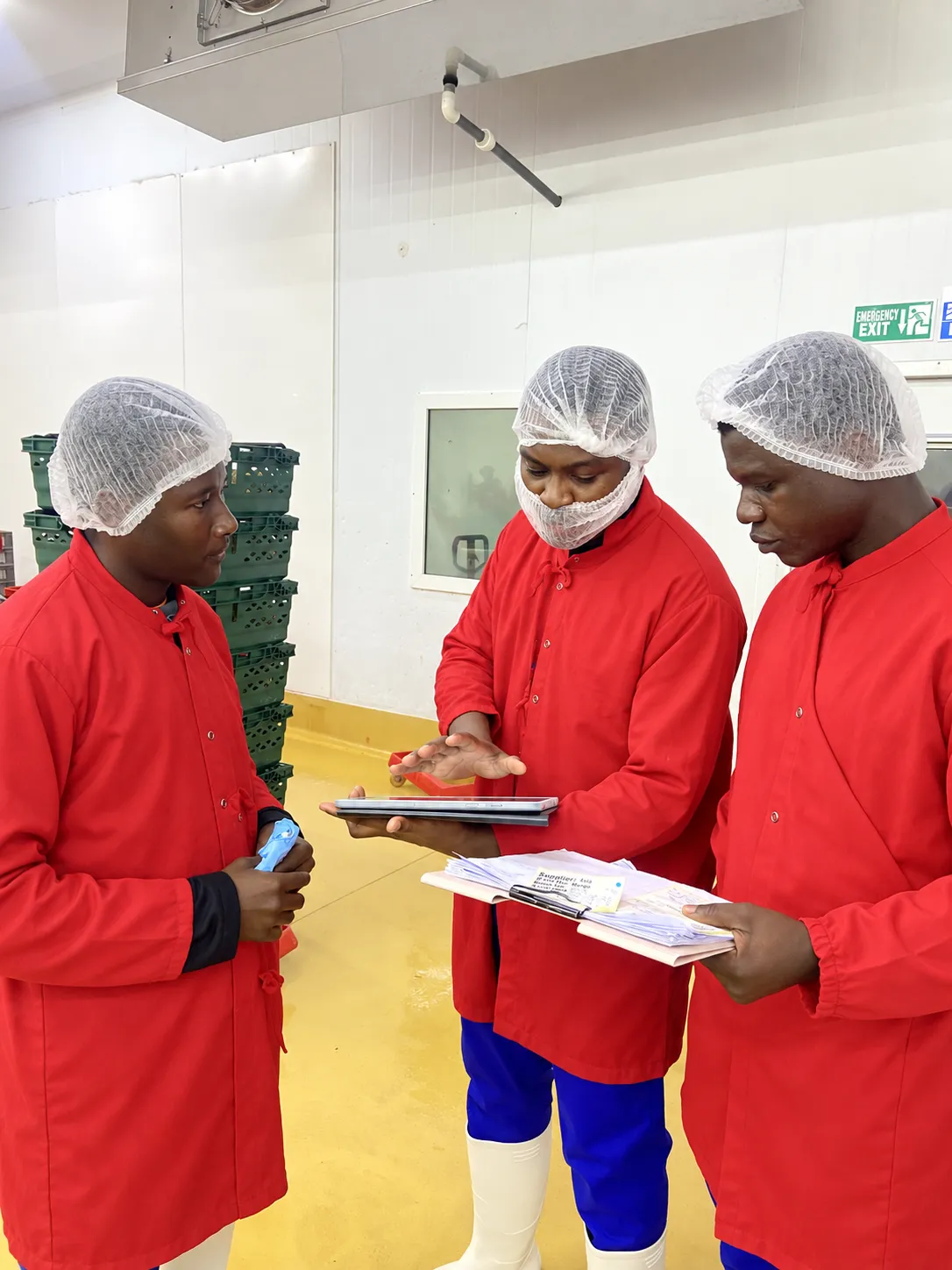
A fruit processing plant, running without paper.
Fruit arrives and the batch is logged once, at the gate. From there it keeps its own name through every station, so what came out can always be matched against what went in — while the shift is still running, not the following week.
- 2017
- Operating since
- 21projects
- Across industries
- 6years
- Longest system in use
Build with Vaarde
Tell us how your operation runs today.
Describe it as it actually is — the sheets, the spreadsheets, the parts that get typed in twice. We will come back with what we think the system should record, and what it should be able to tell you, and when.